A Beginner's Guide to Buying Second-Hand Furniture Safely
October 09, 2026 - DIY

October 09, 2026 - DIY

October 05, 2026 - Interiors

October 01, 2026 - Inspiration
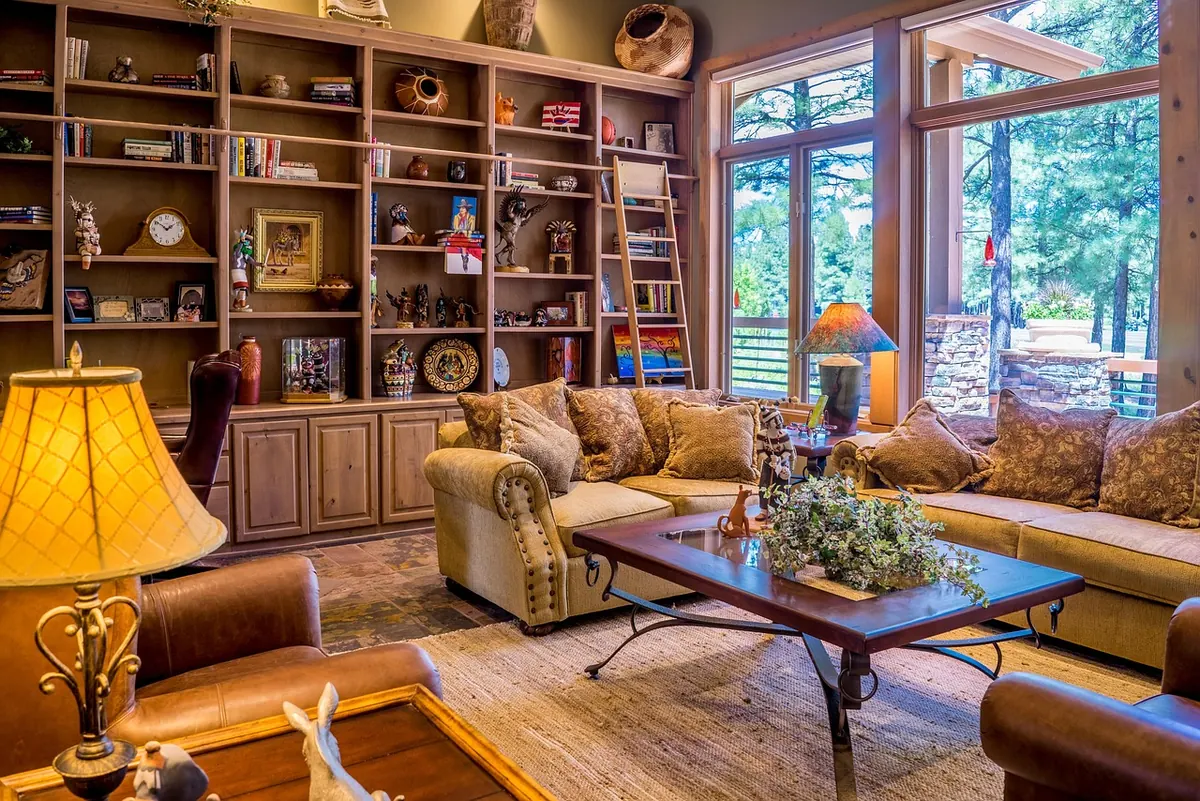
Some rooms greet you with a wash of afternoon sun. North-facing rooms do not. The sun passes them by for most of the day, and what arrives instead is indirect light bounced off the sky — cooler, softer and far greyer than the golden glow of a south-facing sitting room. In a UK winter, with short days and a sky the colour of wet slate, that difference becomes very obvious.
The good news is that this is a decorating problem rather than a structural one. You cannot move the sun. You can change the surfaces its light lands on, the light you add once it fades, and the way the eye reads the room.
Direct sunlight is warm. It carries yellow and red wavelengths and hits a room with real contrast, throwing bright patches and deep shadows that make a space feel alive. North light has no direct beam. It arrives second-hand, reflected off the sky, and the sky is blue. That cool, even, bluish light lands on your walls with almost no contrast at all.
The effect is subtle until you compare two rooms side by side. Cool colours — grey-blue, lilac, sage with a grey base, most of what gets labelled "contemporary grey" — are pushed colder still, and can turn flat and shadowy. Warm colours survive far better. It is also why a north room can look smaller than it is: without pools of light, the eye finds no depth.
None of this is a fault. North light is even and gentle. It flatters artwork, fades fabrics more slowly than a sunny room does, and never glares. It simply needs help.
The single biggest mistake in a north room is a cool grey. Plenty of greys sold as "warm" still carry a blue or green undertone, and north light finds it immediately. The room ends up looking as though it is trying to be bright and failing.
Test properly before you commit. Paint two or three A4 sheets — not tiny chips, which are impossible to read — and tape them to the wall you actually look at. Check them in the morning, in mid-afternoon, and again at night with your lamps on. A colour that looks pleasantly creamy at noon can turn to dishwater by eight o'clock.
Warm off-whites with a hint of yellow, pink or ochre are the safest base: think bone, almond, oatmeal, soft clay. Warm mid-tones such as mushroom or a greige with a brown base suit bedrooms and hallways. Keep ceilings a soft warm white rather than a stark brilliant one, which can read almost blue against a north sky.
And consider going the other way. A pale, half-lit grey room is the worst of both worlds; a rich warm dark — deep olive, inky blue with a green base, warm aubergine — turns a gloomy room into an intentionally cosy one. Darkness only feels like a problem when it looks accidental.
Paint sets the temperature; objects finish the job. Cool light makes warm materials glow, which is why a north room rewards wood, wool and metal with a bit of yellow in it.
You don't have to banish cool colours completely. One or two — a soft blue cushion, a piece of glass — will look fresher against a warm base than an entirely cool scheme does.
A mirror does not create light, but it doubles whatever is there. Hang one on a wall facing the window, or at an angle to catch the light, and a dull corner picks up a second helping of sky. At night, a mirror positioned to catch a lamp gives you the glow of two lamps for the price of one. Avoid pointing one directly at a television.
Small amounts of shine help too: a glass-topped side table, a lacquered tray, a framed print under glass, a polished lamp base. Keep it to two or three pieces — all shine and no texture leaves a room feeling thin and slightly clinical.
The window itself is worth attention. Wash the glass, inside and out, and keep the sill clear. Thin out anything outside that blocks the view of the sky. Swap heavy curtains for a Roman blind, or hang full-height curtains well beyond the frame so they can be pulled clear of the glass during the day rather than covering its edges.
A single ceiling light throws a pool of brightness in the middle of the room and leaves the corners murky, which exaggerates the gloom. Build light in layers instead, and put each layer on its own switch or dimmer:
Bulbs matter as much as fittings. Look for warm white, around 2700K. Cool white bulbs at 4000K and daylight bulbs at 6000K will make the room feel like an office corridor, however good the wallpaper is. Check the lumen figure rather than the wattage if you want real brightness, and choose warm-toned shades — cream linen, paper, aged brass — over grey or black.
Start with the window: clean glass, clear sill, nothing outside blocking the sky, curtains pulled right back. Then choose one warm element and commit to it — a tin of warm off-white for the walls, a brass floor lamp, a wool rug in rust. Add a mirror opposite the window. Swap any cool white bulbs for warm white ones, and get a second lamp into the corner that always looks sad.
Live with it for a fortnight before doing more. North light shifts with the seasons, and a room that feels dim in January often reads calm and generous by May. The aim is not to fake a south-facing room. It is to make the light you have look deliberate, warm and worth sitting in.
Photo: bedrck / Pixabay
A practical guide to buying second-hand furniture: how to measure, inspect and question before you commit, plus...
Open shelving only looks curated when each shelf has a purpose. Here's how to group everyday pieces, balance heights...
October 09, 2026 - DIY
October 05, 2026 - Interiors
Copyright © 2026 Amber Nest. All Right Reserved.