Swarm Season in the UK: How to Prevent, Catch and Rehome a Swarm
It usually starts with a sound. A steady roar from the hedge, louder than any foraging hum, and then a dark ribbon of bees pouring out of a hive and settling on a branch like a bunch of grapes. Swarming looks dramatic, and it is: a colony is splitting itself in two and sending half of its members off to find a new home. It is reproduction at colony level, not aggression, and the bees in that cluster are usually unusually gentle because they filled their honey stomachs before leaving.
Even so, a swarm is a deadline. If you keep bees, it means you have lost half your workforce and probably your old queen. If you don't keep bees, it means a colony is looking for a chimney, a wall cavity or a shed roof. Both situations are manageable, and a little preparation in April saves a lot of scrambling in June.
Why colonies swarm in spring and summer
A colony swarms when it believes it has outgrown its space and the season still offers time to build new comb, raise brood and lay down stores. In the UK that window is roughly April to July, with the peak in May and June, though a warm, early season and a strong nectar flow can push things forward. The trigger is a combination of congestion in the brood nest, a strong population of young nurse bees, plentiful forage and, often, an ageing queen whose pheromone output is declining.
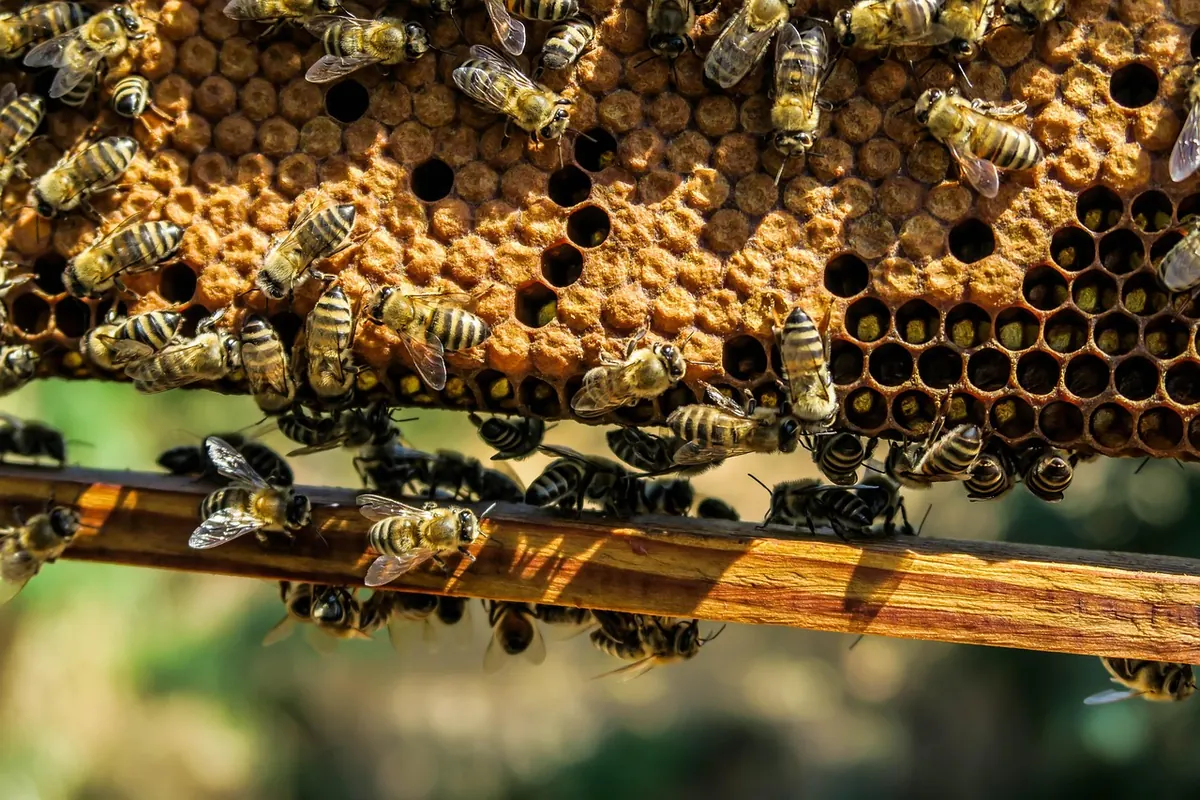
When those conditions line up, the workers build queen cells — usually along the lower edges of the frames — and the old queen is put on a diet to slim her down for flight. On the day the first queen cell is capped, the colony issues. A few days later the new queens emerge, fight it out, and one takes over. Occasionally a colony will throw a second swarm, or cast, with a virgin queen.
Reading the signs before they issue
Swarm preparation is visible weeks in advance if you look for it. From April onwards, inspect every seven days in good weather. Seven days matters because a queen cell is capped around eight days after the egg is laid, and once a colony has capped cells it is committed. If you catch cells while they are still open, you have options. If you arrive to find sealed cells and a thinner crowd of bees, the swarm has probably already gone.
What to watch for: frames packed with bees and little empty comb at the edges of the brood nest, a build-up of drone brood, play cups appearing in numbers, and the sudden presence of queen cells containing larvae or royal jelly. Drone brood alone is normal in spring, but drone brood plus play cups plus congestion is a warning.
Prevention: give them room and break the cycle
Manage space early
Most swarms are a housing problem. Add supers before the bees need them, not after, and make sure the brood box contains drawn comb rather than a wall of foundation. If you have spare brood boxes, swapping out a couple of sealed brood frames for frames of drawn comb gives the queen somewhere to lay and the nurse bees somewhere to work. Do this early in the season, while the colony is still expanding.
Use swarm control when you find queen cells
Finding open queen cells with larvae means the colony has decided. Removing the cells alone rarely helps; the bees simply build more, and you risk losing a queen in the process. Better to use a recognised method:
- Artificial swarm (Pagden method) — move the old queen, plus a frame of brood and bees, to a new box on the original site, and move the original box with its queen cells to one side. The flying bees return to the old queen, while the parent colony raises a new one.
- Demaree — a vertical split. The queen goes into a new box at the bottom, a queen excluder goes above, and the brood and queen cells go into a box on top. The colony behaves as though it has swarmed without either half losing its queen.
- Split into a nucleus — if you have spare kit, take the old queen, a couple of frames of brood and a shake of bees into a nuc. You lose some honey, but you gain a colony and remove the urge to swarm in one move.
Reduce the tendency over time
Swarminess has a genetic element. Queens raised from colonies that swarm every year tend to produce daughters that do the same, which is why requeening from your calmest, slowest-swarming stock is worth the effort. Clipping one wing of the queen will not stop a colony swarming, though it does mark her and may hold the swarm close to the hive, which gives you a second chance. If you consider it, remember you may lose the queen in the process, so have a replacement plan.
Catching a swarm safely
If a swarm settles somewhere accessible — a low branch, a fence post, a bush — it is usually straightforward to collect. If it is high in a tree, inside a chimney or behind cladding, leave it alone and contact a swarm collector. Working at height or cutting into a structure is a job for someone with the right equipment and insurance, and a colony that has moved into a wall is a removal job rather than a swarm catch.
For a straightforward cluster, you will want:
- A skep, swarm box or sturdy cardboard box with a lid, plus a sheet or old cloth
- A bee suit, veil and gloves — even a calm swarm deserves respect
- A water spray bottle, a smoker, a hive tool and secateurs
- A hive or nucleus box ready and on site, with frames of foundation or drawn comb
- A strap or tape, and a ventilated way to transport them
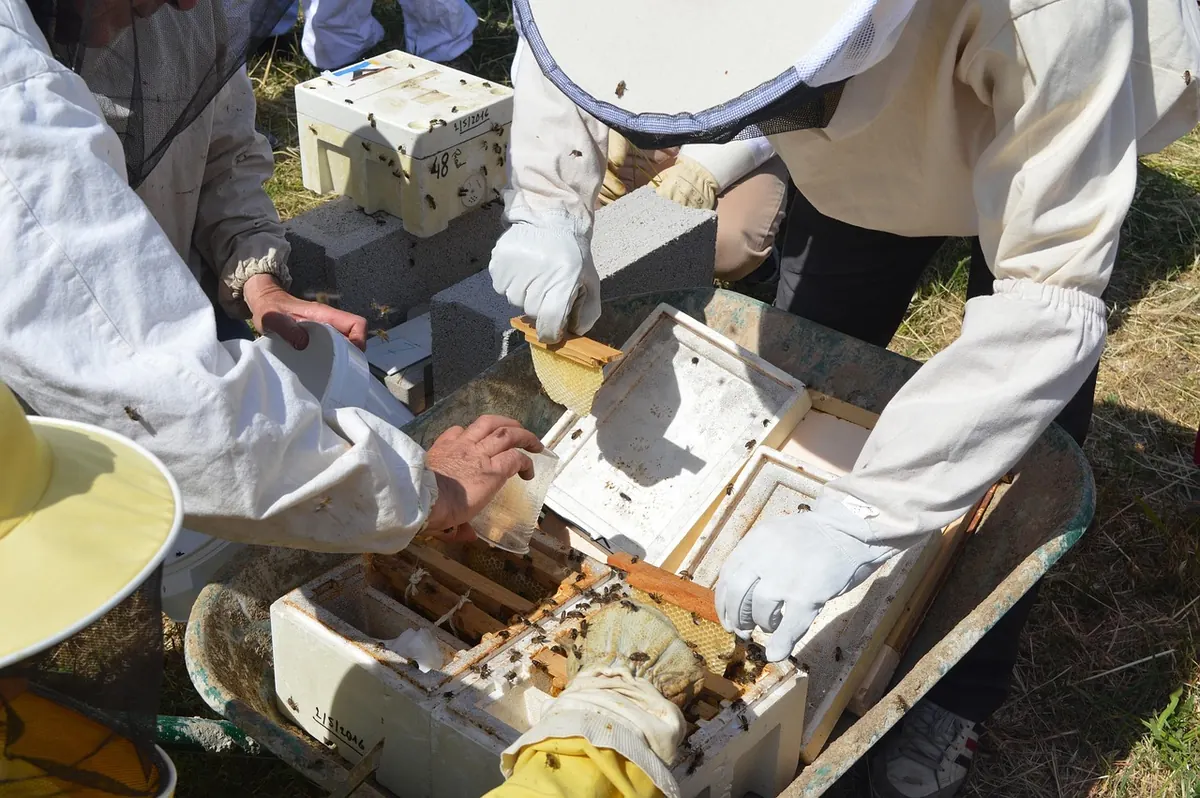
Lay the sheet on the ground beneath the cluster. Give the bees a light spray of water so they tighten up, then shake or brush them firmly into the box, aiming to get the queen in with the main mass. Turn the box upside down on the sheet with a small gap at one corner. The stragglers will walk in, guided by pheromone, and by dusk the whole cluster should be inside. That is the ideal moment to move them.
Hiving a swarm and the first few days
Hive them at dusk into a clean box with drawn comb if you have it. Feed thin sugar syrup to help them draw foundation and settle, and reduce the entrance to a couple of bee spaces so they can defend it against robbing. Keep the hive closed and undisturbed for a few days, then check that the bees are drawing comb and that the queen is laying. Swarms are energetic builders and can produce surprising amounts of comb in a fortnight.
If the swarm came from a nearby apiary, tell the beekeeper. They may want to retrieve it, and a beekeeper who is actively following their swarm has a claim on it.
Rehoming a swarm responsibly
Never tip a swarm into a bin or spray it. Apart from the waste, you are destroying the year's new colonies, which are the future of local beekeeping and much of the surrounding pollination.
In the UK, your county or local beekeeping association usually maintains a list of swarm collectors, and there are national swarm reporting services that pass details to volunteers. If you are offered a swarm, treat it as unknown stock. Keep it away from your main apiary for the first few weeks, watch for signs of brood disease such as sunken, discoloured or perforated cappings, and check for varroa before introducing it to a shared site. If anything looks wrong, ask an experienced beekeeper or your association's bee inspector for advice before moving bees anywhere else.
If you cannot keep the swarm, do not simply hive it and hope. Ask your association whether a beginner wants it — a swarm in a nuc with a marked queen is often the best start a new beekeeper can get.
Get ready before the first warm spell
Swarm season rewards preparation more than any other part of beekeeping. Build your bait hives in March, rub a little old brood comb and a drop of lemongrass oil inside, and site them facing south in dappled shade a few metres off the ground. Check your spare boxes, frames and straps, so that when a cluster appears you are not improvising in a shed at nine in the evening.
Then keep to a seven-day inspection rhythm through the spring, add space before it is needed, act on queen cells the day you find them, and keep a swarm box within reach. Most years you will still see a swarm — on someone else's fence, at least. With a plan in place, it becomes an opportunity rather than a problem.
Photo: Vaidas Vaiciulis / Pexels

Winterising Your Apiary: How to Prepare Hives for a British Winter
A practical guide to getting hives through a British winter: autumn feeding, varroa treatment, mouse...
Building vs Buying a Beehive: Cost, Time and Convenience Compared
Flat-pack, ready-made or built from scratch? A practical look at what each beehive option really costs in...
About Us